Madame
Never Let Me GoMadame is the outside visitor who repeatedly selects student work at Hailsham, becoming both the center of the students’ speculation about the Gallery and a witness to the human cost of the world they inhabit. Her reserve makes her seem remote, even frightened of the students; later, her tears reveal not secret knowledge of their thoughts but grief at what their existence represents. She helps gather and preserve their work, yet cannot offer them the future they seek.
Identity and Place at Hailsham
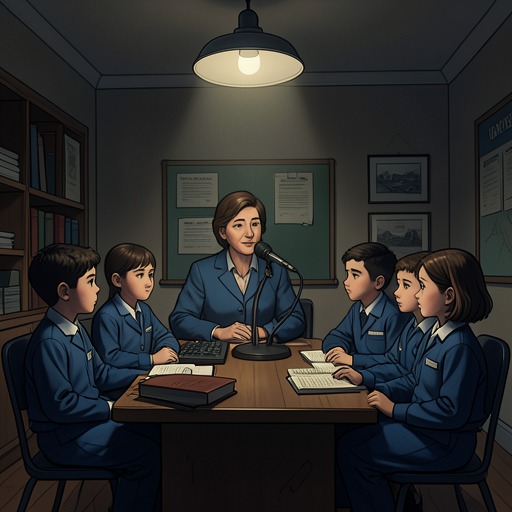
Madame visits Hailsham usually twice a year, and sometimes three or four times, to choose from the students’ best work. The guardians call her Madame, a name associated with the students’ uncertain belief that she is French or Belgian. Kathy H. remembers her as tall and narrow, with short hair and a sharp grey suit. Unlike gardeners, drivers, and most other visitors from outside, Madame does not talk to the students. She keeps her distance, and her cold expression becomes the first thing they associate with her.
The Gallery itself remains obscure to the students. They know that Madame takes away selected paintings, poems, and other work, but they do not know where the collection goes or what purpose it serves. The subject is so charged that students have made it an unspoken rule not to discuss it with the guardians. When a student accidentally mentions the Gallery in Mr. Roger’s class, the room remains light-hearted, but everyone understands that the remark has crossed a boundary. Madame’s regular visits are therefore visible and consequential, while their meaning remains concealed.
The Students’ Test and Its Reversal
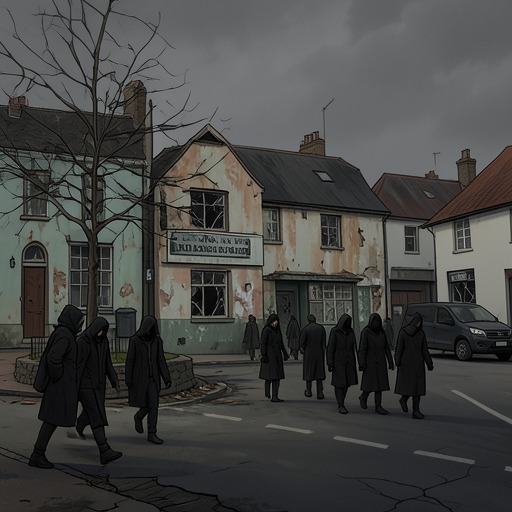
When Ruth suggests that Madame is scared of the students, her idea turns their impression of Madame into a question they can test. Six students plan to approach her together, remain civil, and watch her reaction. They get their chance when Madame parks in the courtyard after Mr. Frank’s class. As she walks toward the doorway with her briefcase held close, the group moves out around her and politely asks to pass.
Madame does not cry out or make a scene. She simply freezes and waits for them to go by. But the students, watching closely, see her suppress a shudder and fear that one of them might brush against her. The test confirms Ruth’s theory while changing what it means to the group: Madame’s fear does not feel like a victory. The students understand that she sees them with the revulsion someone might feel toward spiders, and they become aware of how it feels to be regarded that way. Even Ruth is shaken, and another student seems close to tears. The encounter turns a private dare into an early recognition of the students’ exclusion from the world beyond Hailsham.
That first discovery shadows Kathy H.’s later meeting with Madame at her home. When Kathy H. calls to her at the gate, Madame turns sharply; the look she gives Kathy H. and Tommy recalls the earlier encounter. She seems to identify them at once as students from Hailsham, and her body stiffens as though she again expects them to approach like spiders. Then she studies them more carefully. Her response has not become warm, but the immediate revulsion recedes enough for her to listen.
Kathy H.’s Dance and Madame’s Tears
The clearest change in Kathy H.’s understanding of Madame begins with an episode she cannot explain at the time. Alone in a dormitory, Kathy H. dances to the song Never Let Me Go, holding a pillow as if it were a baby. Madame appears in the partly open doorway and watches from the corridor. She does not cross the threshold or tell Kathy H. what to do; instead, she stands still and cries. Kathy H. notices the familiar look of unease, now accompanied by an emotion she cannot identify.
Years later, Kathy H. tells Tommy about the incident. He suggests that Madame may have been moved by the sight of Kathy H. holding what appeared to be a baby, given that the students cannot have children. Kathy H. questions how Madame could have known what the pillow meant in her imagination. The explanation remains uncertain until the later visit: Madame was not reading Kathy H.’s mind, and she had not known the private story Kathy H. attached to the song.
When Kathy H. finally describes that imagined story to Madame, she recalls a woman who has been told she cannot have a baby, then holds one tightly for fear of losing it. Madame explains that her tears had a different source. In Kathy H.’s dance she saw a child clinging to an older, humane world that was giving way to a more scientific and efficient one, a world capable of curing old illnesses but also, in Madame’s view, harsh and cruel. The scene had broken her heart, and she had never forgotten it. The meaning of the pillow thus changes: it is not evidence that Madame could perceive Kathy H.’s private thoughts, but the occasion for Madame to see, in the child’s gesture, a larger loss.
The Collection and the Deferral Theory
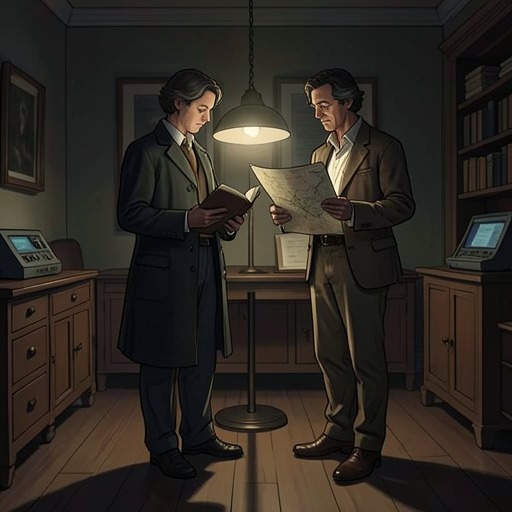
Madame’s collection becomes central to Tommy’s attempt to understand the Gallery. He recalls that Miss Emily once said Hailsham students’ art mattered not only as evidence, and that Miss Lucy had also told him the Gallery was important. Tommy reasons that if couples could receive extra time before donations, someone would need a way to judge whether their love was genuine. In his theory, Madame’s collection allows her to compare work made by each student over many years and assess whether a couple’s inner lives match. He believes the art reveals their souls and that the Gallery was connected to deciding who deserved a deferral.
Kathy H. remembers Madame crying at the dormitory doorway while considering Tommy’s theory, but she does not present the theory as established fact. She imagines that Madame may have mistaken the pillow for a lover and been moved by the apparent closeness. Tommy concludes that finding Madame is the only obvious way to discover how couples apply. When the two visit her, they tell her that they think they understand the Gallery. Madame describes the paintings, poems, and other works as a collection she gathered over the years, a difficult undertaking in which she and others once believed. She also admits that she repeatedly asks herself what it was for. Her response confirms the labor and importance she attached to the collection, but it does not confirm Tommy’s proposed system of judging lovers.
The Visit with Miss Emily and Madame’s Limits
At the meeting, Madame asks whether she has gone too far in discussing the Gallery, then turns her attention to whether Kathy H. and Tommy wish to continue. Kathy H. realizes that these questions are directed not only to the couple: someone is listening in the dark. Miss Emily’s voice answers, and Madame goes to bring her into the room in a wheelchair. Madame remains behind the wheelchair while Miss Emily takes responsibility for answering the visitors.
Miss Emily explains that Madame worked hard for their project, but that its ending has left Madame disillusioned. Madame’s own position is more complicated than that of a detached collector: she remains affected by what Hailsham tried to do, though she is not the person who gives Kathy H. and Tommy their answer about the deferral rumor. Miss Emily says that the rumor has repeatedly arisen among students and that the adults eventually allowed it to persist as a fantasy, even though it would disappoint couples who took it seriously. Madame’s account of the collection should therefore be distinguished from Tommy’s theory about its role in granting extra time.
Madame tells Kathy H. and Tommy that their stories have touched her, wishes she could help, and says that they are now by themselves. As she reaches out to Kathy H.’s cheek, she is trembling and close to tears. Her compassion is genuine, but it does not alter their circumstances. The contrast defines her role: she can recognize the students’ humanity, collect the work that bears witness to it, and mourn the world that has failed them, but she cannot protect them from what comes next.